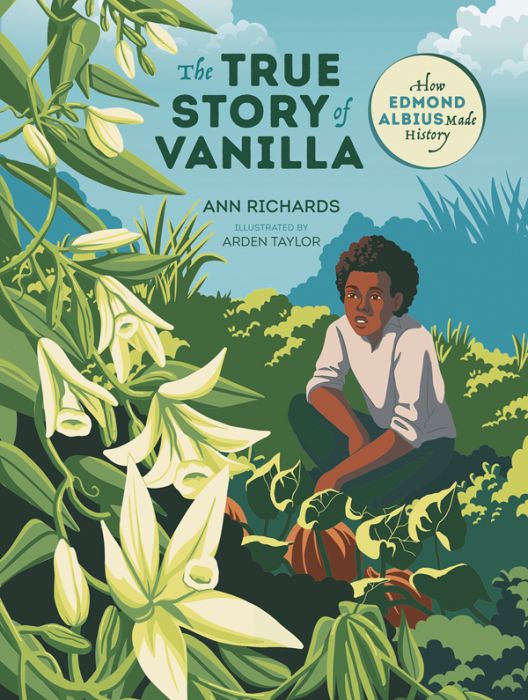
Part of the Orca Biography series for middle-grade readers, this illustrated nonfiction book tells the story of how an enslaved boy, Edmond Albius, discovered how to hand-pollinate vanilla, a technique that is still used all over the world today.
In 1841, a 12-year-old enslaved boy, Edmond Albius, made history when he discovered how to hand-pollinate vanilla plants using a bamboo twig.
Until that time, only bees in Mexico could pollinate the plant—botanists couldn’t figure out another way. With his master, Edmond travelled around Réunion Island to share his technique, le geste d’Edmonde (Edmond’s gesture), which is still in use today. Despite his important achievement, as an enslaved person Edmond didn’t receive payment or recognition for his contribution to science, eventually dying in poverty after being freed from slavery in 1848. Today it is recognized that Edmond’s method of pollination was key to bringing vanilla to the world, helped to create a billion-dollar industry and gave us the flavor we love to use in cooking, baking, medicine and, of course, ice cream.
"In the Pod." Time line. Glossary. Resources. Index. Full-color illustrations.
Title alpha The True Story of Vanilla: How Edmund Albius Made History
Category Biography Middle Plus
Pages Count 104
Genre Nonfiction
Topics Edmund Albius (1829-1880). Enslaved children. Réunion Island. Botany. Flowers and plants. Vanilla. Pollination.
Lexile 1060L
Trim Size 8 1/2" x 6 1/2"
JLG Span Fall
Language English
Rights type Print
Publication date 2025-05-12
JLG Release Date Aug 2025
Minimum grade 5
Maximum grade 8
Reading level Middle
Format Print
Biography Middle Plus (Grades 5-8)
Biography Middle Plus
Biography Middle Plus (Grades 5-8)
For Grades 5-8
This collection features biography and memoir titles that introduce middle school readers to a wide range of real people and personal stories—from familiar historical figures and individuals shaping the world today to lesser-known people with compelling lives and contributions. Selections emphasize narrative-driven approaches, including visual and illustrated storytelling, that help readers connect personal experiences to history, culture, science, and innovation.



 21.6
21.6